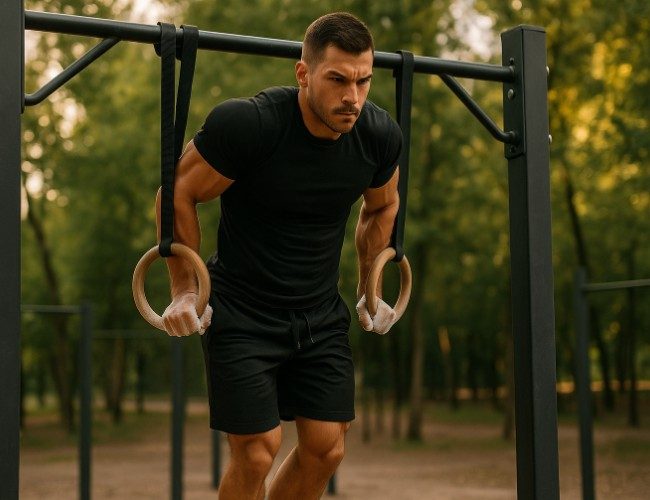
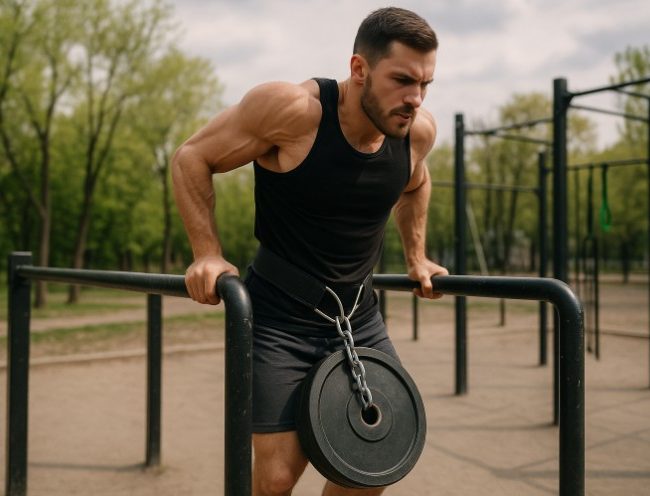
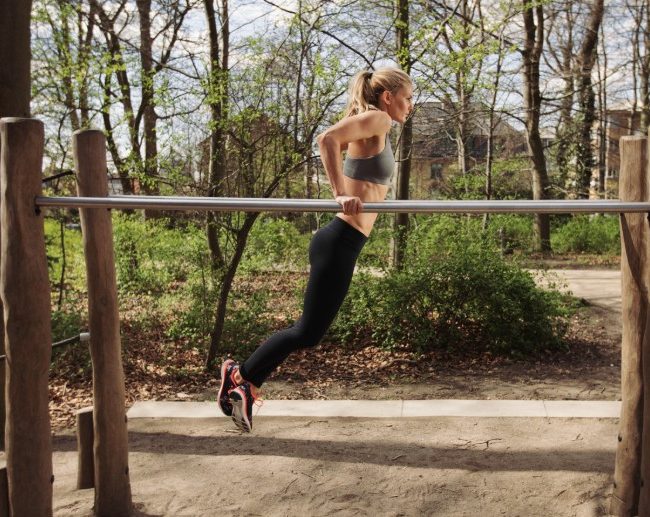
I’ve always loved the simplicity and power of calisthenics, no gym memberships, no bulky equipment, just pure bodyweight training.
When I began doing calisthenics workouts at home, I discovered how effective they can be for building strength, improving mobility, and staying consistent with minimal space.
In this post, I’m sharing 22 of my go-to calisthenics exercises you can do right from your living room, bedroom, or garden. Whether you’re a total beginner or want to push your limits, there’s something here for you.
Why Choose Calisthenics Workouts at Home?
Can You Really Build Strength Without Equipment?
Yes, 100%. I’ve built noticeable strength and improved my endurance using just bodyweight exercises at home. With the right structure, intensity, and progression, you can hit every muscle group and build lean, functional muscle without ever lifting a dumbbell.
What Are the Benefits of Bodyweight Training at Home?
Calisthenics offers:
- Convenience: I don’t need to leave the house
- Low barrier to entry: Perfect for beginners
- Functional strength: Movements that mimic real-life motions
- No cost: No gym, no gear, no excuses
Plus, it makes me feel more connected to my body, and every workout becomes about control, balance, and progress.
How Much Space Do You Actually Need?
Not much at all. I train in a small living room and even manage some exercises next to my bed. If you’ve got room to lie down and stretch your arms out, you’ve got enough space for a solid home calisthenics routine.
How I Structure My Calisthenics Home Workouts?
Warm-Up Routine I Follow Before Starting
Warming up properly is key. I typically spend 5–7 minutes doing:
- Arm circles and shoulder rolls
- Jumping jacks or high knees
- Hip circles and lunges
- Dynamic leg swings
It wakes up the joints and primes the muscles for movement.
How I Progress Without Weights or Gym Gear?
Progression in calisthenics workouts at home comes through:
- Increasing reps and sets
- Slowing down tempo (for more time under tension)
- Adding advanced variations like archer push-ups or Bulgarian split squats
- Reducing rest time to raise intensity
Even without weights, the challenge always grows.
Rest Time, Sets, and Rep Guidelines I Use
Here’s how I usually break it down:
- Beginners: 2–3 sets of 8–12 reps
- Intermediate: 3–4 sets of 12–15 reps
- Advanced: 4+ sets, 15–20 reps or advanced holds
I rest for 30–60 seconds between exercises or as needed.
Detailed Breakdown of 22 Calisthenics Workouts at Home
UPPER BODY WORKOUTS
1. Standard Push-Ups
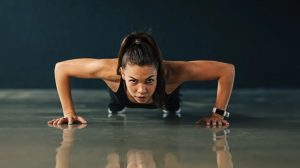
Muscles Worked: Chest, shoulders, triceps, core
How to Do It: Start in a high plank position, hands slightly wider than shoulder-width, body in a straight line. Lower your chest to the floor by bending your elbows, then push back up.
Form Tips:
- Keep elbows at about a 45° angle, not flared wide
- Don’t let your hips sag or lift
- Engage your core throughout
Progression: Clap push-ups, archer push-ups
Regression: Knee push-ups
My Tip: Count “one Mississippi” as you lower and again as you push up to control the tempo.
2. Incline Push-Ups

Muscles Worked: Chest (lower emphasis), triceps
How to Do It: Place your hands on an elevated surface like a bench or sturdy chair. Keep your body straight and perform a push-up.
Form Tips:
- Don’t shrug your shoulders
- The higher the surface, the easier the move
Progression: Lower the height over time
Regression: Wall push-ups
My Tip: These were key when I was learning full push-ups from scratch.
3. Decline Push-Ups
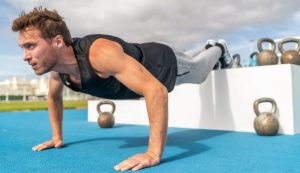
Muscles Worked: Upper chest, shoulders
How to Do It: Place your feet on a raised surface, like a couch. Perform push-ups as usual, but the angle shifts the focus upwards.
Form Tips:
- Keep hips in line
- Don’t overextend your neck, look slightly ahead
Progression: Add pauses at the bottom
Regression: Use lower elevation
My Tip: Great for progressing toward handstand push-up strength.
4. Archer Push-Ups
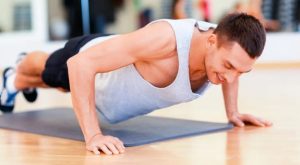
Muscles Worked: Chest, shoulders, core
How to Do It: Widen your hands. Lower your chest over one arm while the other stays extended. Push back to centre, then alternate.
Form Tips:
- Shift weight smoothly
- Don’t bend the straight arm
Progression: Deepen the range
Regression: Do them on knees
My Tip: You’ll feel this in the obliques too, it’s a great strength builder for one-arm push-ups.
5. Chair Dips
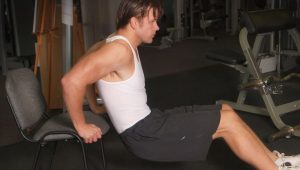
Muscles Worked: Triceps, shoulders
How to Do It: Sit on the edge of a chair. Hands next to hips. Slide forward, dip your body down, then press back up.
Form Tips:
- Elbows point backwards
- Keep shoulders down and back
Progression: Straight legs
Regression: Bent knees
My Tip: I do these at the end of upper body sessions to burn out my triceps.
6. Pike Push-Ups
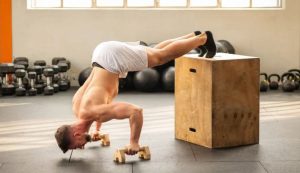
Muscles Worked: Shoulders, triceps, upper chest
How to Do It: Form an inverted V shape with hips high. Bend elbows and lower your head toward the ground, then press up.
Form Tips:
- Don’t flare elbows
- Keep gaze toward feet or legs
Progression: Elevated feet
Regression: Higher hips
My Tip: This helped me build toward freestanding handstand push-ups.
7. Wall Handstand Hold
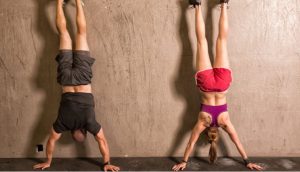
Muscles Worked: Shoulders, traps, core
How to Do It: Kick up into a handstand against a wall (back or chest to wall). Hold the position with a tight core and locked arms.
Form Tips:
- Keep your body aligned (no banana back)
- Spread your fingers for balance
Progression: Freestanding handstand
Regression: Wall walk or partial holds
My Tip: Start with 15 seconds and increase gradually, it’s mentally and physically challenging!
8. Doorframe Rows / Towel Rows
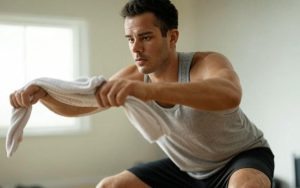
Muscles Worked: Back, biceps
How to Do It: Secure a towel in a closed door or use a sturdy table. Lean back holding the towel, then pull your chest toward the anchor point.
Form Tips:
- Elbows close to body
- Keep hips from dropping
Progression: Deeper angle, one-arm rows
Regression: Higher grip
My Tip: The best home alternative to pull-ups when no bar is available.
CORE WORKOUTS
9. Plank Variations
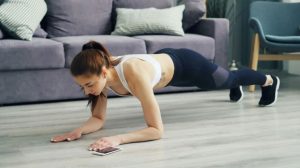
Muscles Worked: Full core, shoulders
How to Do It: Start on forearms or hands. Keep your body in a straight line, abs braced. For variations: shoulder taps, side planks, or plank reaches.
Form Tips:
- Don’t let hips sag or rise
- Keep eyes on the floor
Progression: Weighted plank, longer holds
Regression: Knees down
My Tip: Side planks with leg raises fire up obliques big time.
10. Hollow Body Hold
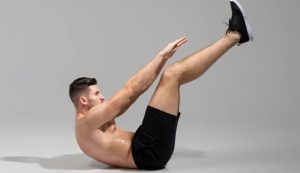
Muscles Worked: Deep core, hip flexors
How to Do It: Lie flat. Lift shoulders and legs 4–6 inches off the ground. Press lower back into the floor.
Form Tips:
- Keep arms by ears
- No gap under the lower back
Progression: Longer holds
Regression: Tuck position (knees bent)
My Tip: One of the hardest core holds, aim for 15 seconds and build from there.
11. Lying Leg Raises
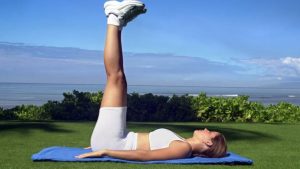
Muscles Worked: Lower abs
How to Do It: Lie down, legs straight. Lift to vertical, then lower without touching the floor.
Form Tips:
- Hands under hips for support
- Lower slowly to avoid using momentum
Progression: Add a pulse at the top
Regression: Bent knee raises
My Tip: Try these in supersets with planks, it torches your core.
12. Hanging Leg Raises (if bar available)
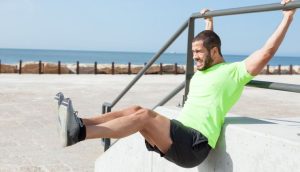
Muscles Worked: Lower abs, grip, hip flexors
How to Do It: Hang from a pull-up bar. Raise legs to 90° or higher, then lower slowly.
Form Tips:
- No swinging
- Engage lats slightly for stability
Progression: Toes-to-bar
Regression: Hanging knee raises
My Tip: Builds core AND grip, two birds, one bar.
13. Mountain Climbers
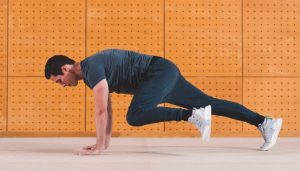
Muscles Worked: Core, cardio
How to Do It: From plank, drive knees rapidly to the chest one at a time.
Form Tips:
- Back flat
- Keep rhythm without bouncing
Progression: Cross-body climbers
Regression: Slower pace
My Tip: 30 seconds on, 15 off, 3–4 rounds, it’s a sweatfest.
14. V-Ups / Tuck-Ups
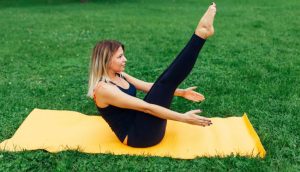
Muscles Worked: Full abs
How to Do It: Lie flat, raise both arms and legs to meet at the top (V-Up). For Tuck-Ups, bring knees to chest.
Form Tips:
- Exhale as you lift
- Keep movements controlled
Progression: Weighted V-ups
Regression: One leg at a time
My Tip: Best done early in the workout when your core is fresh.
LOWER BODY WORKOUTS
15. Bodyweight Squats

Muscles Worked: Quads, glutes
How to Do It: Feet shoulder-width, chest up. Lower until thighs are parallel or deeper, then drive back up.
Form Tips:
- Knees track toes
- Push hips back first
Progression: Jump squats, pistol squats
Regression: Half squats
My Tip: Add a pause at the bottom to build control.
16. Bulgarian Split Squats
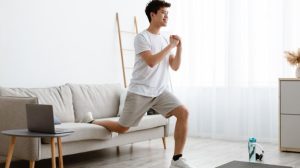
Muscles Worked: Glutes, hamstrings, quads
How to Do It: Back foot on a sofa, front foot forward. Lower until back knee nearly touches the ground.
Form Tips:
- Keep torso upright
- Use arms for balance
Progression: Weighted or slow descent
Regression: Regular split squat
My Tip: Expect to be sore the next day, especially if you pause at the bottom.
17. Glute Bridges
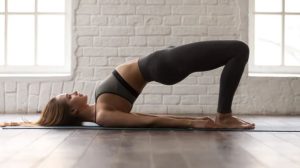
Muscles Worked: Glutes, hamstrings
How to Do It: Lie on your back, knees bent, feet flat. Lift hips, squeeze glutes, hold at the top.
Form Tips:
- Don’t hyperextend lower back
- Push through heels
Progression: Single-leg bridges
Regression: Shorter range
My Tip: Squeeze for 2–3 seconds at the top for maximum activation.
18. Wall Sit
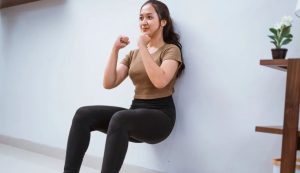
Muscles Worked: Quads, glutes, core
How to Do It: Back against wall, knees at 90°. Hold the position.
Form Tips:
- Feet flat
- Don’t press with hands on thighs
Progression: Add time or weight
Regression: Higher wall sit
My Tip: Use a timer and go for personal bests weekly.
19. Calf Raises
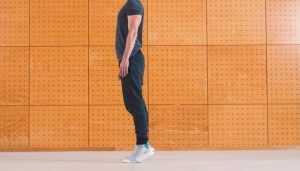
Muscles Worked: Calves
How to Do It: Stand tall, lift heels slowly, pause at top, lower back down.
Form Tips:
- Use a wall for balance
- Don’t bounce
Progression: Single leg, step edge raises
Regression: Assisted with both hands
My Tip: Go slow and squeeze, it’s not about reps, it’s about control.
FULL-BODY / DYNAMIC
20. Burpees
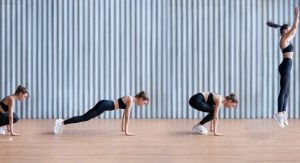
Muscles Worked: Full body, cardio
How to Do It: Squat, place hands down, jump to plank, push-up, jump feet back in, then explode upward.
Form Tips:
- Keep movement fluid
- Avoid letting knees cave in during the jump
Progression: Add a tuck jump
Regression: Step instead of jump
My Tip: Set a number (like 20) and do them for time, great finisher.
21. Bear Crawls

Muscles Worked: Core, shoulders, coordination
How to Do It: From all fours, lift knees slightly. Move opposite hand and foot forward and repeat.
Form Tips:
- Stay low
- Move slowly and with control
Progression: Longer distances
Regression: Smaller range
My Tip: A sneaky core killer, go forward and back 3–4 times.
22. Plank to Push-Up Transitions
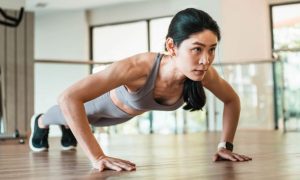
Muscles Worked: Chest, shoulders, triceps, core
How to Do It: From plank on elbows, push up into full push-up position one hand at a time, then return.
Form Tips:
- Keep hips stable
- Alternate leading hand
Progression: Add tempo
Regression: From knees
My Tip: Count your reps and aim to beat your time each week.
Sample Weekly Calisthenics Workout Plan
Here’s how I’d structure a beginner-to-intermediate home routine:
| Day | Focus Area | Sample Exercises | Time |
| Monday | Full Body | Push-ups, Squats, Planks, Burpees | 30 mins |
| Tuesday | Core + Mobility | Hollow Hold, Leg Raises, Side Planks, Stretch | 20 mins |
| Wednesday | Upper Body | Pike Push-Ups, Dips, Rows, Handstand Hold | 30 mins |
| Thursday | Lower Body | Split Squats, Wall Sits, Glute Bridges | 25 mins |
| Friday | Full Body HIIT | Jump Squats, Crab Walks, Push-Up Combo | 20 mins |
Final Thoughts – My Experience with Calisthenics Workouts at Home
Training at home through calisthenics has made my fitness more consistent, more enjoyable, and more sustainable.
There’s zero travel, zero excuses, and total freedom to move. But if you ever want to take your training to the next level, visiting a dedicated calisthenics gym in London can be a game changer.. I’ve built strength, improved flexibility, and discovered just how powerful bodyweight workouts can be.
My advice? Start simple. Master the basics. Then challenge yourself with harder variations. Consistency matters more than complexity.
FAQs – Calisthenics Workouts at Home
Can I really get fit doing only calisthenics at home?
Yes, absolutely. I’ve built strength, endurance, and mobility with nothing more than bodyweight exercises in my living room.
The key is consistency and progression, just like you would in a gym. Calisthenics helps develop functional strength, which means you’ll move better in everyday life, not just under a barbell.
Do I need any equipment for calisthenics workouts at home?
No equipment is required, but a few items can enhance your routine. I started with just a mat and a sturdy chair.
Over time, I added a doorframe pull-up bar, resistance bands, and yoga blocks to open up more variations. Still, every exercise I’ve listed can be done without any gear at all.
How often should I train calisthenics at home?
I recommend training 3 to 5 days per week depending on your goals and schedule. When I was starting out, I did full-body sessions three times a week.
As I progressed, I split my workouts into upper body, lower body, and core-focused days. Rest and recovery are just as important as the workouts themselves.
What if I don’t have much space at home?
If you can stretch your arms out sideways and lie down, you’ve got enough space. I’ve done entire workouts in a 2×2 metre space between my sofa and coffee table.
Most calisthenics exercises require minimal movement area, you just need a clear surface and some creativity.
How do I stay motivated to work out at home?
This was a tough one for me at first. What worked was setting small weekly goals (like improving plank hold time), following a plan, and tracking progress.
Sometimes I follow along with YouTube videos for structure. And honestly, once I saw the results, staying motivated became much easier.
Can I build muscle with calisthenics alone?
Yes, you can build lean, defined muscle through calisthenics, especially in the early stages.
The secret is progressive overload: making movements harder over time by increasing reps, slowing tempo, or using advanced variations (like archer push-ups or pistol squats). It’s not about lifting heavier, it’s about mastering your own bodyweight.
Are calisthenics workouts effective for fat loss?
Yes, especially when combined with a healthy diet. Exercises like burpees, jump squats, and mountain climbers are great for burning calories and boosting metabolism.
I sometimes do high-intensity interval circuits (HIIT) using only bodyweight, and it’s just as sweaty as any cardio session I’ve done at the gym.
What’s the difference between calisthenics and regular home workouts?
Calisthenics focuses on control, movement quality, and body mechanics, while typical home workouts often include dumbbells or resistance training.
I love calisthenics because it trains full-body strength, coordination, and mobility, all using natural movement patterns. It’s minimalistic, efficient, and feels more athletic.
How long should a calisthenics workout be?
My typical session lasts 20 to 40 minutes, depending on the day and focus. If I’m doing HIIT or a core burner, it might be 20 minutes.
A full-body strength day can take closer to 40. The beauty of home calisthenics workouts is that they’re time-flexible, you can even do a 10-minute circuit and still get benefits.
Can beginners start calisthenics at home without experience?
Definitely. I started with barely any upper body strength and struggled to hold a proper plank.
The key is to start with the basics, incline push-ups, squats, wall sits, and planks, and build from there. You don’t need to be able to do pull-ups or handstands on day one. Just take it one rep at a time.