My Push Day Workout Routine: Build Powerful Chest, Shoulders & Triceps with Bodyweight & Minimal Equipment
For years, I overlooked the importance of a structured push day workout. I did random push-ups, benched occasionally, and never really felt progress.
But once I committed to a well-rounded push day focused on calisthenics and minimal equipment, my upper body strength, shoulder stability, and muscle control skyrocketed.
In this post, I’m breaking down my complete push day routine, training philosophy, exercises I swear by, and how I’ve built serious pushing power using nothing but bodyweight and a few tools.
What Is a Push Day Workout and Why Should You Care?

What Exactly Is a Push Day Workout?
A push day focuses on training all the muscles involved in pushing movements. These include the chest, shoulders, and triceps. Whether I’m doing push-ups, dips, or overhead pressing variations, I’m activating the muscles that push weight away from my body.
How Push Day Fits into the PPL (Push/Pull/Legs) Split?
In a Push/Pull/Legs (PPL) split:
- Push Day = Chest, shoulders, triceps
- Pull Day = Back, biceps
- Leg Day = Quads, glutes, hamstrings, calves
This setup gives me a logical way to balance training volume, target all major muscle groups, and recover properly.
What Are the Benefits of a Dedicated Push Day?
- Increased upper body strength
- Greater shoulder and triceps stability
- Better pushing mechanics in calisthenics (like handstands or dips)
- A more structured approach to training
How Push Day Helped Me Improve My Calisthenics Game?
Once I started treating push day seriously, my push-up form improved, I unlocked pike push-ups, and I finally gained enough control to hold a freestanding handstand. Strength grew, but more importantly, so did mobility and control.
Is Push Day Just for Upper Body Training?
Mostly yes, but not entirely. A strong push day also relies on:
- Core engagement
- Serratus anterior (for scapular movement)
- Shoulder stabilisers
So, while the focus is upper body, it’s a full-body experience.
Which Muscles Do I Train on Push Day?
Chest Muscles – Upper, Middle, and Lower Pecs
Push-ups, dips, and variations hit different parts of the chest:
- Standard push-ups target the mid-pec
- Incline push-ups for lower chest
- Decline push-ups or ring dips activate upper chest
Shoulder Muscles – Anterior Delts and Stability Muscles
I emphasise the front delts with:
- Pike push-ups
- Handstand push-ups
- Overhead pressing variations
And I engage the rotator cuff and traps using isometric holds and band work.
Triceps – The Engine Behind All Push Movements
The triceps handle elbow extension, which is essential for lockouts in dips and push-ups. I train them with:
- Diamond push-ups
- Triceps extensions (banded)
- Ring dips with a close grip
Core and Serratus – The Supporting Cast I Never Ignore
A strong push relies on:
- Core stability during push-ups and HSPUs
- Serratus anterior activation for scapular glide
I include planks, L-sit support holds, and push-up pluses to activate them.
How Different Grips and Angles Hit Different Muscles?
By changing hand placement:
- Wide grip = more chest
- Narrow grip = more triceps
- Feet elevated = more upper chest and shoulders
Vertical vs Horizontal Push Exercises – Why Both Matter
| Type | Exercises | Primary Focus |
| Horizontal | Push-ups, ring push-ups | Chest, triceps, front delts |
| Vertical | Pike push-ups, HSPUs | Shoulders, triceps |
Balancing both gives me well-rounded upper body development.
My Push Day Philosophy: Strength, Balance & Control
Why I Train Movement Patterns, Not Just Muscles?
I don’t just target muscles, I train movements. Pushing isn’t about isolating your pecs; it’s about pressing, bracing, stabilising, and moving with control.
Combining Skill Progressions with Muscle Hypertrophy
Each push day includes:
- A skill progression (like handstands)
- A strength-based movement (like dips or decline push-ups)
- Accessory work for size and control
Why Slower Reps Often Lead to Bigger Gains?
I emphasise tempo:
- 3–5 second eccentrics
- Paused bottom positions
- Controlled lockouts
This increased time under tension gives me better results than speeding through sets.
Managing Fatigue Across Push, Pull, and Leg Days
If push day is intense, I ensure pull and leg days are adjusted accordingly. I avoid overtraining by:
- Rotating intensity
- Prioritising recovery
- Tracking my performance
Mobility and Prehab: Keeping My Shoulders Healthy
Every push day includes:
- Band pull-aparts
- Shoulder dislocates
- Scapula circles
- Internal/external rotation drills
These keep my shoulders mobile and pain-free.
My Full Push Day Workout Routine
My Warm-Up Ritual: Activating Push Muscles Safely
I spend 8–10 minutes prepping:
- Scapular push-ups – to fire up serratus
- Wall angels – to open the thoracic spine
- Band face pulls – to activate rear delts
- Cat-cow + downward dog – to prime the shoulders
Core Compound Movements I Focus On
Push-Ups (4×12–15)
- Form-first: elbows at 45°, core tight
- Progress to decline or archer push-ups
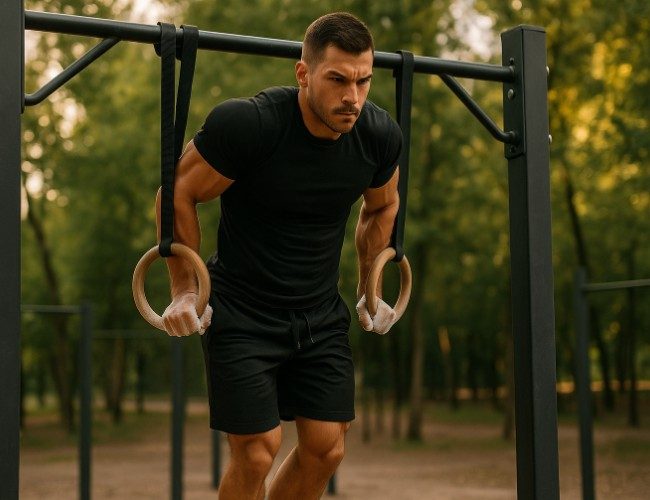
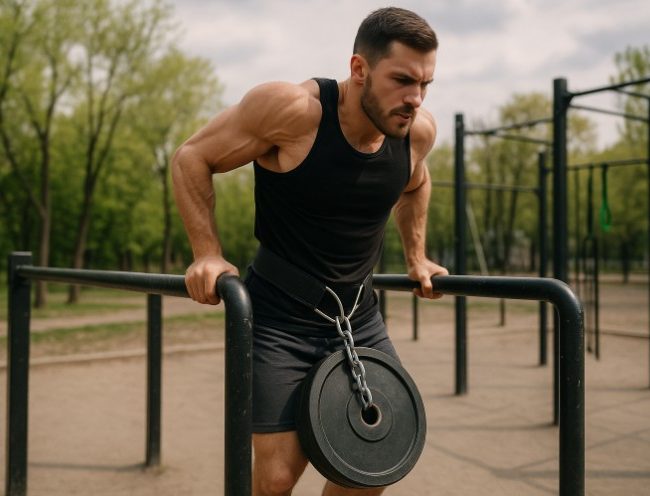
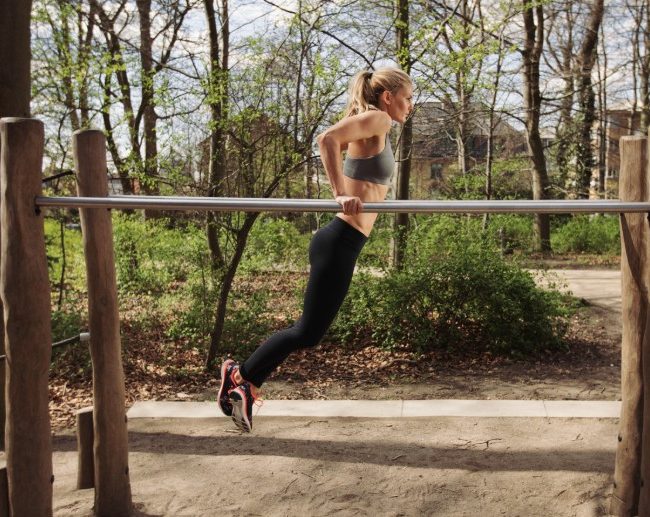
Dips / Ring Dips (3×8–10)
- Keep shoulders stable
- Avoid flaring elbows
Pike Push-Ups (3×6–8)
- Targets shoulders
- Helps prep for handstand push-ups
Mid-Workout Skill Work
- Handstand Holds (wall-supported or freestanding)
- Wall-supported HSPUs (2–3 sets of 3–5 reps)
- Archer Push-Ups – great for unilateral control
Targeted Isolation & Burnout Sets
- Diamond Push-Ups (3xAMRAP)
- Band Lateral Raises – for shoulder caps
- Triceps Extensions (Band or Ring)
- Push-Up Iso Holds at Bottom – brutal finisher
My Push Day Core Add-On Circuit
- Plank to Push – 30s
- Push-Up Climbers – 20 reps
- L-Sit Support Holds – 20s hold
- Push-Up Hold with Arm Reach – 10 each side
What Equipment Do I Use on Push Day?
Minimal Gear That Gives Maximum Results
- Rings – for dips, push-ups, and instability
- Parallettes – deeper push-ups, wrist comfort
- Resistance Bands – mobility and triceps work
- Towels/Sliders – for push-up variations and core
How I Train Effectively When I Have No Equipment?
| Movement | With Equipment | No-Equipment Option |
| Dips | Rings/Parallel Bars | Between two chairs |
| Band Extensions | Resistance Bands | Close-grip push-ups to failure |
| Lateral Raises | Bands or Dumbbells | Bodyweight lean + isometric |
| Pike Press | Elevated feet/pike board | On floor |
Bodyweight-Only Push Day Workout (No Gym Needed)
My Home Push Day Routine
- Standard Push-Ups – 3×15
- Feet Elevated Push-Ups – 3×10
- Pike Push-Ups – 3×6
- Diamond Push-Ups – 3xAMRAP
- Push-Up to Plank Taps – 3×10 each side
- Wall Handstand Hold – 3 rounds x 30 seconds
How I Progress My Push-Up Work Over Time?
My progression path:
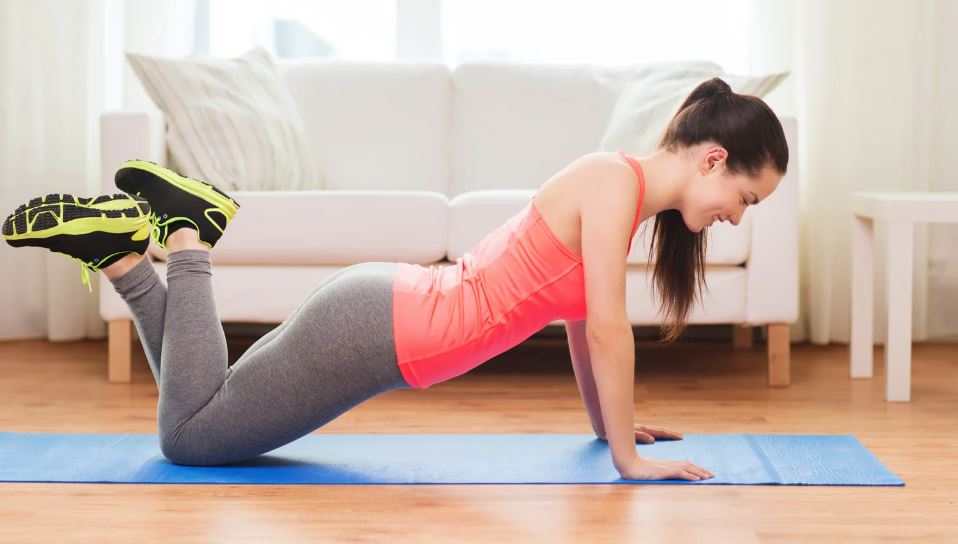
- Wall Push-Ups
- Incline Push-Ups
- Standard Push-Ups
- Decline Push-Ups
- Archer Push-Ups
- One-Arm Push-Ups
Creating Intensity Without Weights
I increase difficulty by:
- Slowing reps down
- Reducing rest times
- Using pause holds at the bottom
How I Train Shoulder Pressing Without Dumbbells?
- Handstand Push-Ups (HSPU) against wall
- Pseudo Planche Push-Ups for shoulder-forward pressing
- Elevated Pike Push-Ups to simulate overhead press
How I Split Push Movements Throughout the Week?
Main Push Day
- Strength + volume
- Focus: dips, push-ups, shoulder pressing
Skill Day Push
- Handstand work
- Planche leans
- Ring holds
Optional Volume Day
- High rep push-ups, light dips, shoulder taps
When and How to Add a Second Push Session?
- Recovery and fatigue management is key
- I reduce load or volume in one session
- One day is skill-based, the other strength-based
Recovery Between Push and Pull Days
- I give 24–48 hours between push/pull
- Prioritise nutrition, hydration, and sleep
Common Push Day Mistakes I Learned to Avoid
1. Skipping Warm-Up and Scapular Activation
Cold shoulders = bad mechanics. Now I warm up religiously.
2. Letting Form Break Down Just to Get More Reps
I stop a set when form breaks. Clean reps always win.
3. Overemphasising Chest and Neglecting Shoulders
I used to push too much chest and ignore vertical pressing.
4. Ignoring Pain Around Elbows
Pain is a signal, not a challenge. I now modify and recover.
5. Not Logging Progress or Focusing on Skill Gaps
I track everything reps, tempo, new progressions. It keeps me consistent.
Sample Weekly Push/Pull/Leg Split with Push Day Included

| Day | Focus | Notes |
| Monday | Push (Heavy) | Dips, Pike Push-Ups, Ring Push-Ups |
| Tuesday | Pull (Strength) | Pull-Ups, Rows, Biceps |
| Wednesday | Legs | Squats, Lunges, Core Stabilisation |
| Thursday | Rest / Skill | Handstand holds, Hollow body work |
| Friday | Push (Skill/Volume) | HSPUs, Archer Push-Ups, Shoulder Work |
| Saturday | Pull (Volume) | Isometric Holds, Grip Work |
| Sunday | Active Recovery | Mobility, Walking, Foam Rolling |
Final Thoughts: What Push Day Taught Me About Strength Training?
A well-built push day workout helps you develop real pressing strength, bulletproof shoulders, and a powerful chest, all without needing fancy equipment.
Whether you’re training for aesthetics, athletic performance, or skill mastery, a proper push day is essential. Train with intent, track your progress, and push yourself with purpose, one rep at a time.